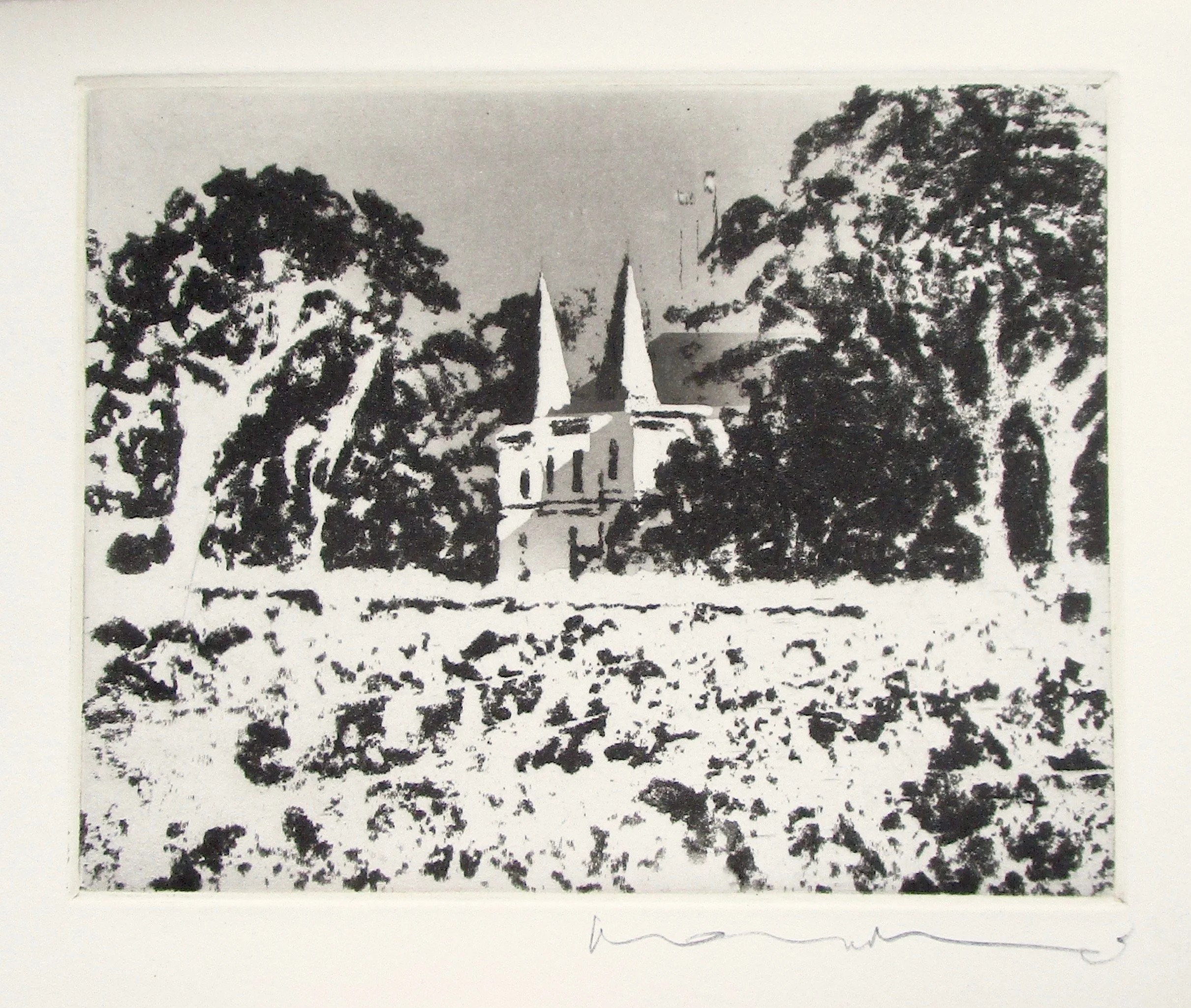
Chateau Palmer from Chateau Margaux 1986
Etching on wove paper, 120 × 150mm (image), 154 × 188mm (sheet). Signed, no edition, perhaps 20 or 30 pulled. Excellent condition, framed to conservation standards in a hand-painted black diagonal frame.
£475
Thought to be produced in association with the Wine Arts portfolio 1989, another example appeared at Lyon & Turnbull Auctions in 2020 with an inscription and date, 1986 (it sold for £375). An absolute gem of a little etching from this master printmaker. Perfect condition, framed to conservation standards in a plain black sustainable wood frame.
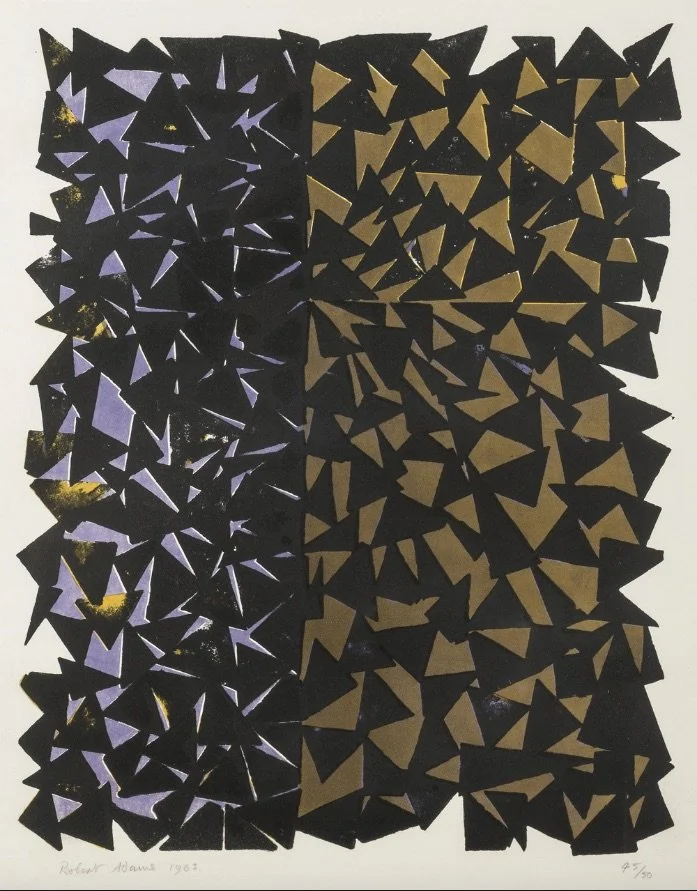
Screen II 1962
Lithograph on handmade Barcham Green paper 758 X 578mm (sheet). Signed, dated and numbered from the edition of 50. Published and printed at the Curwen Studio, London 1963. Very good condition, framed to conservations standards in a hand-painted black sustainable wood frame.
Provenance: Curwen Gallery Archive. Collection: Tate Gallery
£720
This image relates directly to the screen forms Adams was sculpting in the early 1960s. The bronze illustrated (National Gallery of Victoria, Melbourne, Australia) dates from 1961 and is almost the exact size of the lithograph.
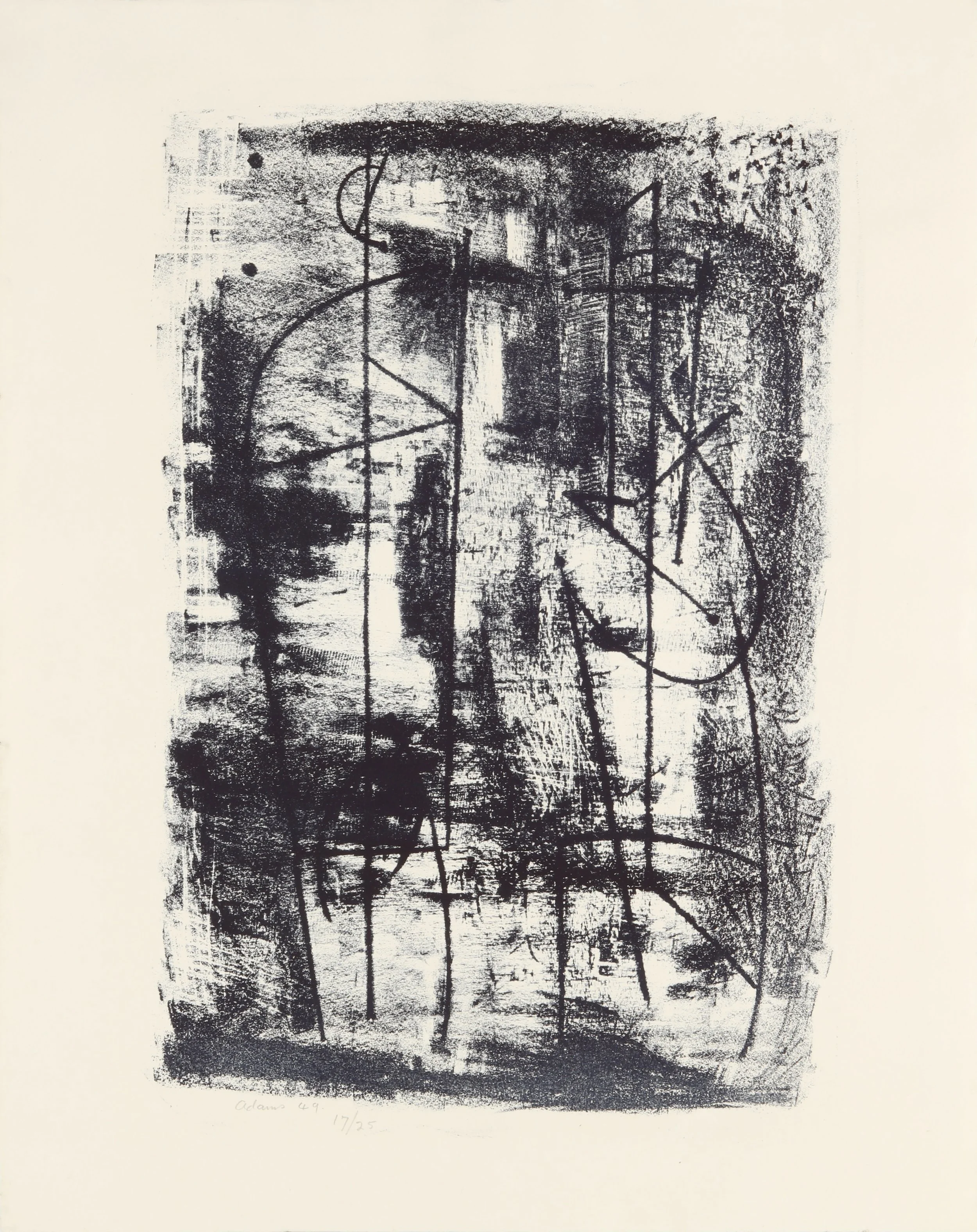
Composition with Drawn Forms 1949
Lithograph on cream wove paper 574 × 457mm (sheet size). Signed, dated and numbered form the edition of 25. Published by Redfern Gallery, London. Excellent condition, framed to conservation standards in a hand-painted matt brown wood frame.
Collection: British Museum. Literature: Avant-Garde British Printmaking 1914-1960 (cat. 186)
£875
Exceptionally forward-looking lithograph from “the neglected genius of post-war British sculpture” (Time Out Magazine 1993), inspired by his time in Paris. His use of the lithographic stone to create texture through scumbling crayon and scratching out is a good example of the natural crossover between sculpture and printmaking.
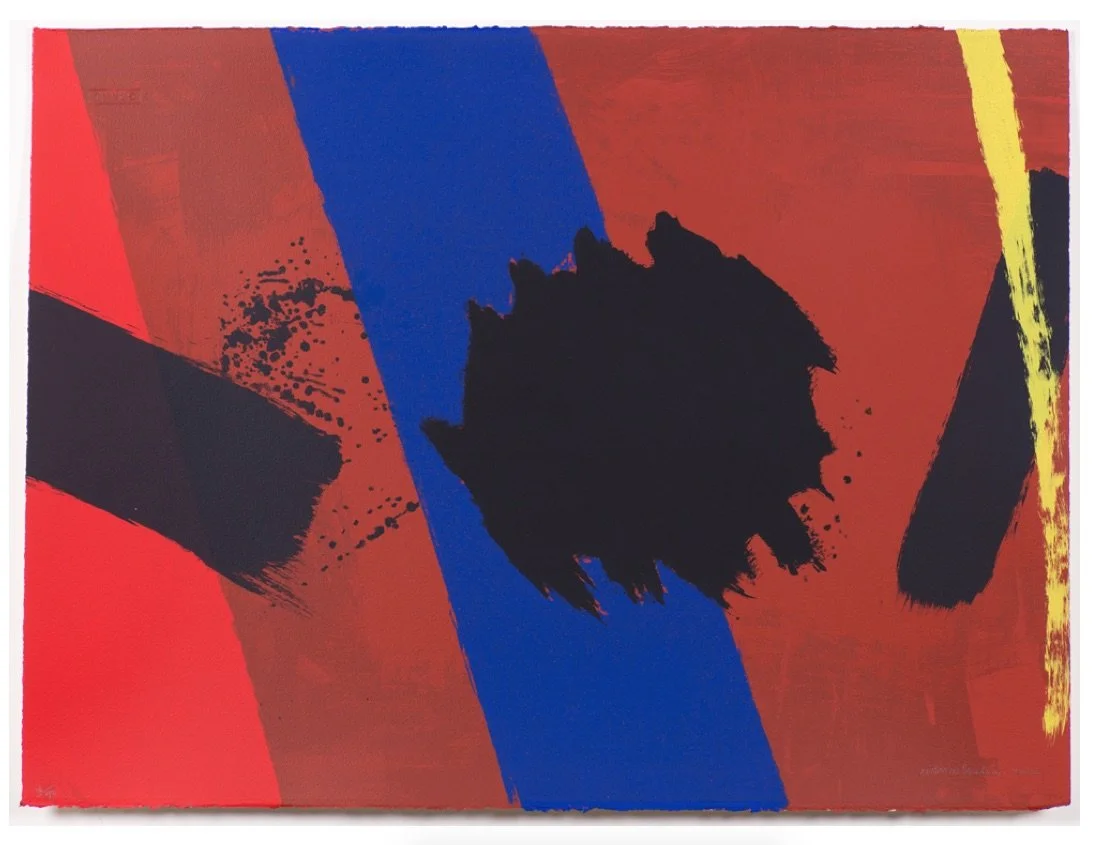
Earth Series IV 2002
Screenprint in 7 colours on Velin Arches Blanc paper printed to deckle edges, 585 × 762mm. Signed, dated and numbered in pencil from the edition of 70, printed at Graal Press, Edinburgh 2002. Excellent condition, framed to conservation standards in a chunky, limed oak frame.
Collections: National Gallery of Scotland. Reference: Gunn 58. Provenance: Artist’s estate
£1,850
From a series of five screenprints, this is the best. Barns-Graham’s work within a series evolves in complexity: Earth Series I-III are simpler than the final two and have the central motif the other way up. By chance, the plate was reversed during proofing Earth Series IV , Barns-Graham found she preferred this new inverted image and continued with it for the final screenprint, Earth Series V, in which she pared down the colour to bring it back in line with the first three. Barns-Graham said of her work: “People only have to breathe deeply and look. If there is anything they enjoy, a shape or colour, that’s tremendous. People mustn’t worry or be anxious about understanding it all. I can look at a page of Chinese calligraphy and not have a clue what it’s about, but sense a worthwhile idea.”
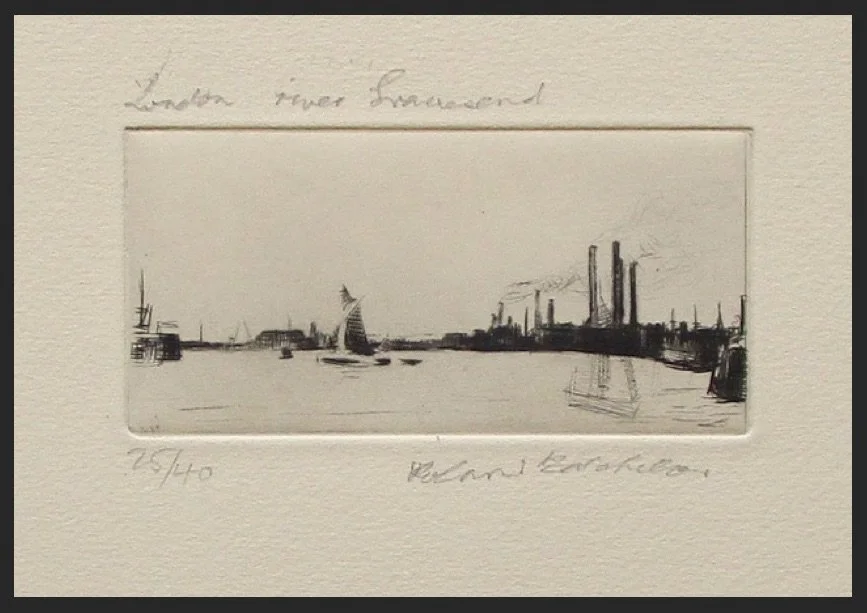
London River, Gravesend 1936
Drypoint etching on cream wove paper 50 × 100mm (image), 255 × 380mm (sheet). Signed, inscribed with tile and numbered in pencil from the edition of 40. Published and printed in 1986 to accompany a Roland Batchelor retrospective exhibition at the Royal Academy the same year. Excellent condition, unframed.
£125
During the Second World War, Batchelor lost a series of un-proofed copper plates he etched in 1936. When they were found in 1984 Batchelor agreed to edition them for the first time, 50 years later. This was the only edition made.
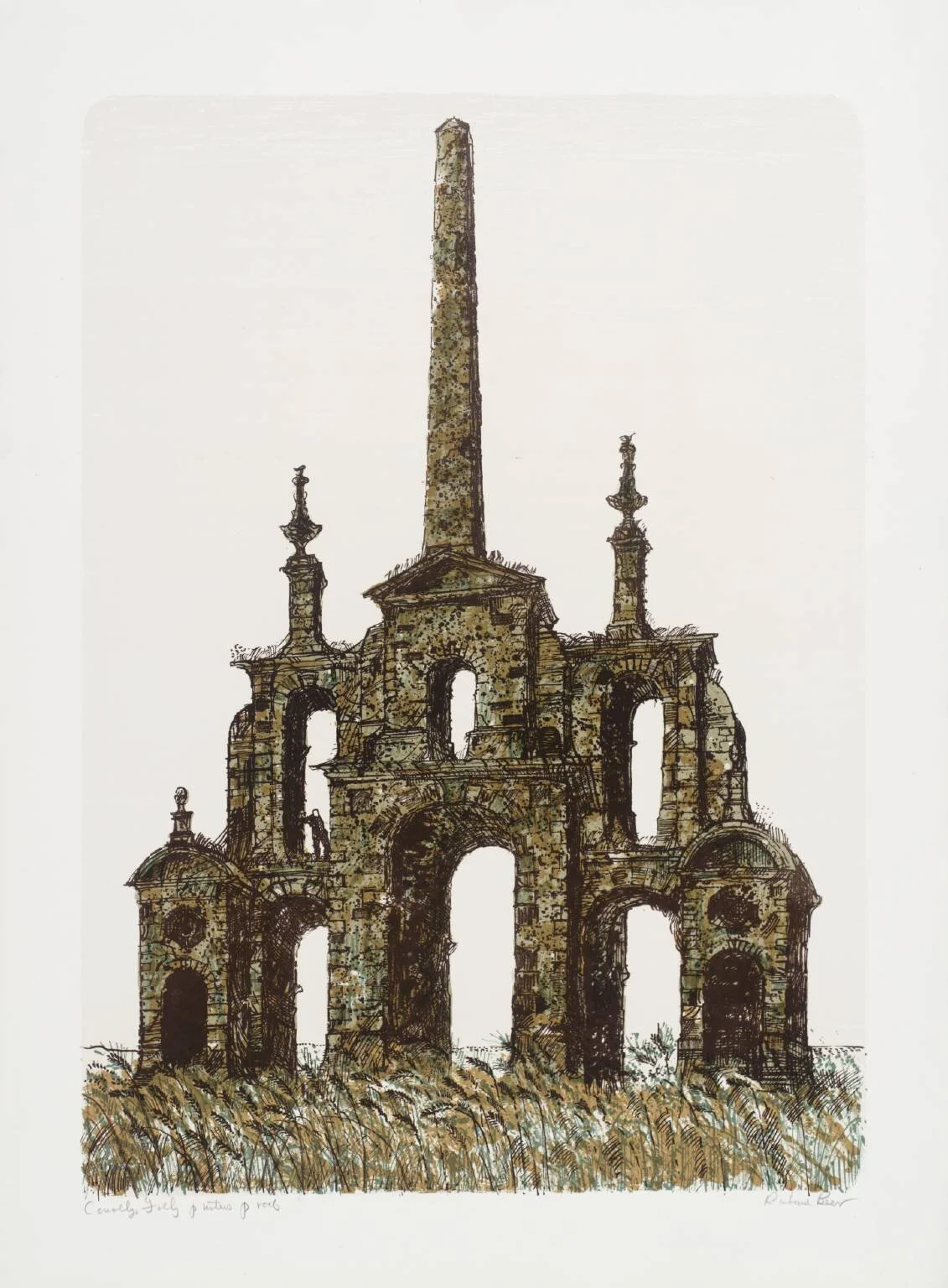
Conolly’s Folly 1971
Lithograph on T H Saunders wove paper with full margins. 651 x 467 (image). Signed, titled and numbered from the edition of 70. Printed by Stanley Jones at the Curwen Studio, and published by Curwen prints in 1971 as part of their Eight Follies portfolio. A Pair with Tresham’s Triangular Lodge. Excellent condition, unframed.
Collection Tate Gallery; Government Art Collection
£275
Conolly’s Folly is an obelisk monument in County Kildare, built in 1740. This view from 1971 shows it in a dilapidated state before it was restored a few years later. Apart from a fascination with ruins and follies, the cynosure in this image, for me, is the figure standing in the top left arch – there’s something 1970s IRA about him.
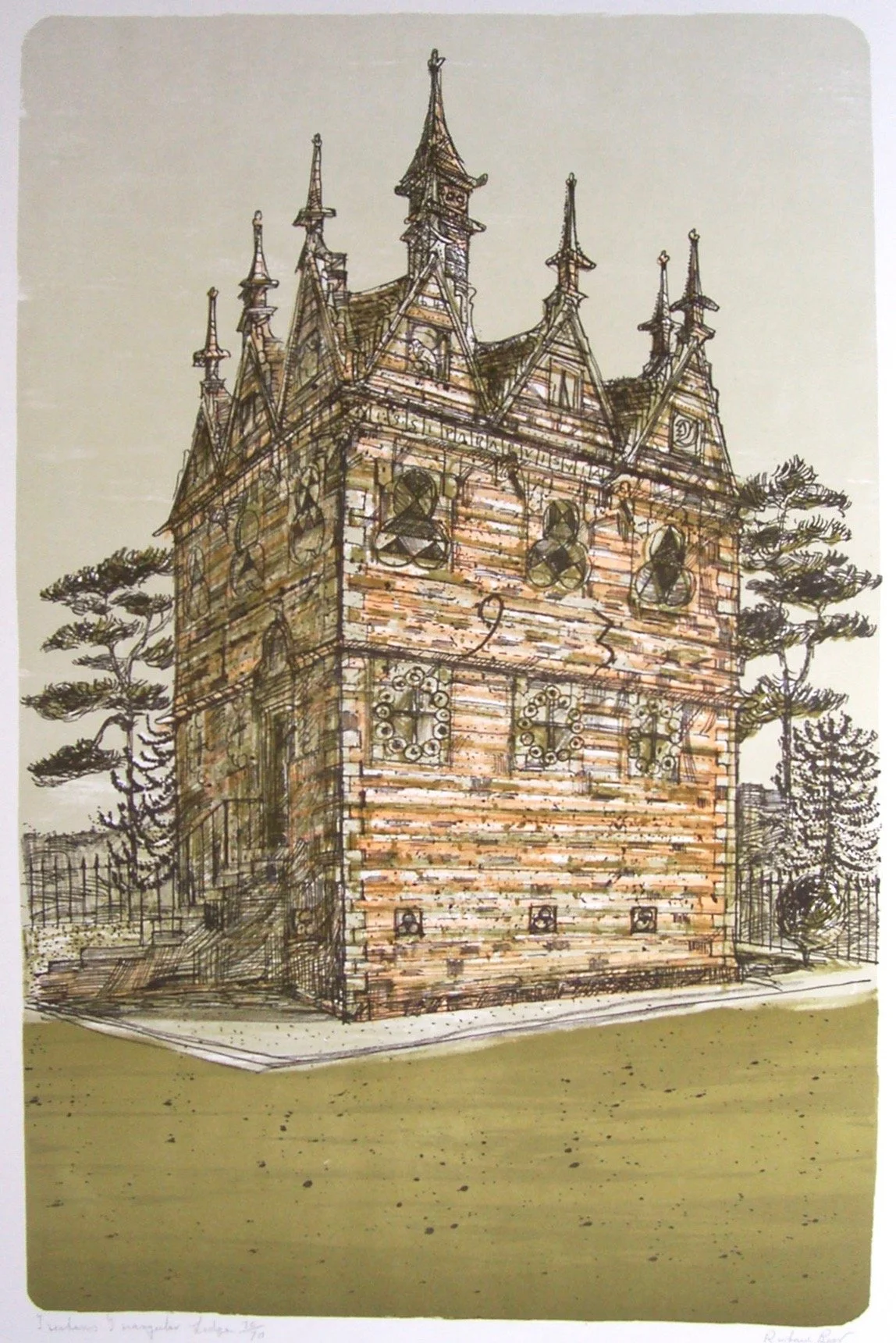
Tresham’s Triangular Lodge 1971
Lithograph on T H Saunders wove paper with full margins. Image size 651 x 467. Signed, titled and numbered from the edition of 70. Printed by Stanley Jones at the Curwen Studio, and published by Curwen prints in 1971 as part of their Eight Follies portfolio. A pair with Conolly’s Folly. Excellent condition, unframed. Collections: Tate Gallery; Government Art Collection
£275
The Triangular Lodge was built in 1597 by Sir Thomas Tresham as a hunting lodge-come-puzzle house – the stone work displays all sorts of family, political and religious conundrums of the time. Its claim to fame today is that it was the meeting place of Tresham, Catesby, Fawkes and co. the infamous Gunpowder Plotters. The Lodge is located near Rushton in Northamptonshire, it has remained in good order over the centuries and is open to the public care of English Heritage – I’ve been there, it’s worth a visit.
Untitled (Italian Girl Head and Shoulders) 1963
Lithograph on wove paper 315 x 505mm (sheet), 265 x 365 (image). Signed, dated and inscribed ‘Proof’ in pencil. A rare uneditioned proof, printed at the Curwen Studio, London 1963. Very good condition, framed to conservation standards in a hand painted grey sustainable hardwood frame.
£620
An unusually demure image from Butler, although the pose with one arm behind her head is typical. I think it likely another colour plate or two was originally intended to complete the image, however Butler was happy enough with the proof in this state to sign it. The version of Italian Girl he chose to edition (Tate Gallery P06062) is a reclining figure in three colours. So, if you’re looking for something reasonably priced by one of the most important mid-20th-century British sculptors, that no other collector, public or private, is likely to have, then this is the piece for you.
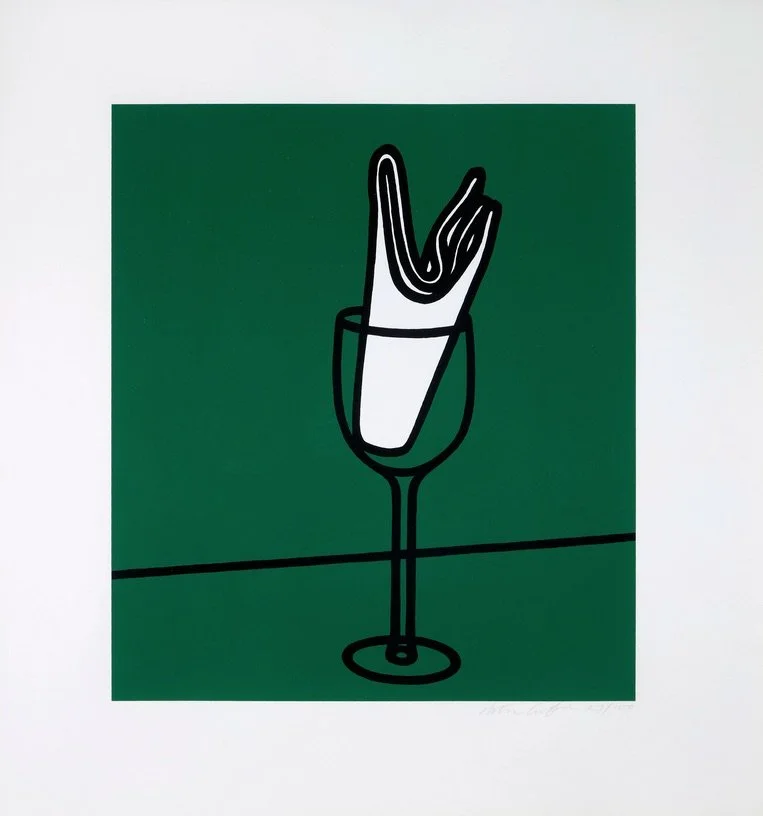
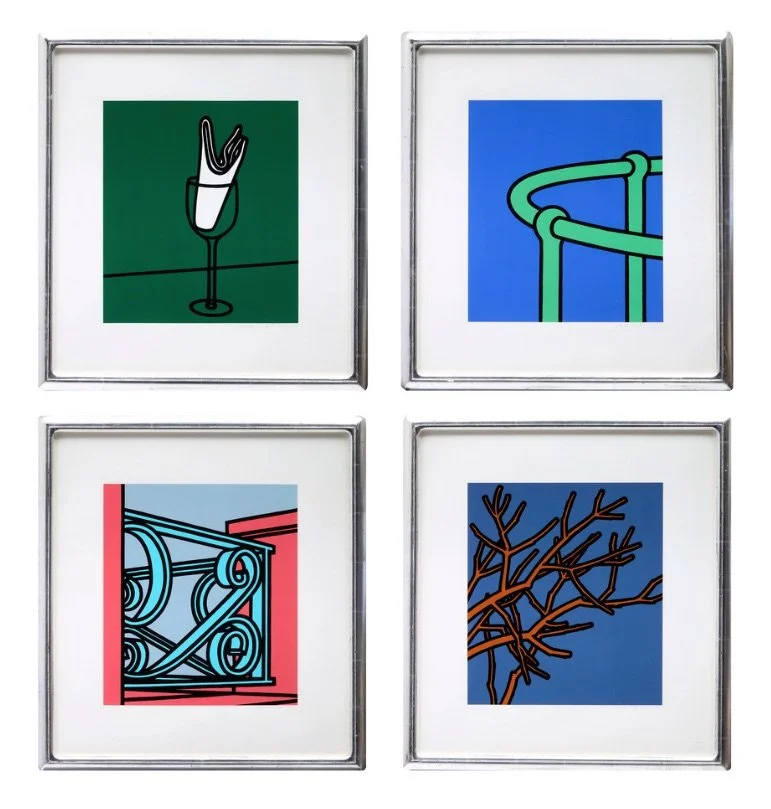
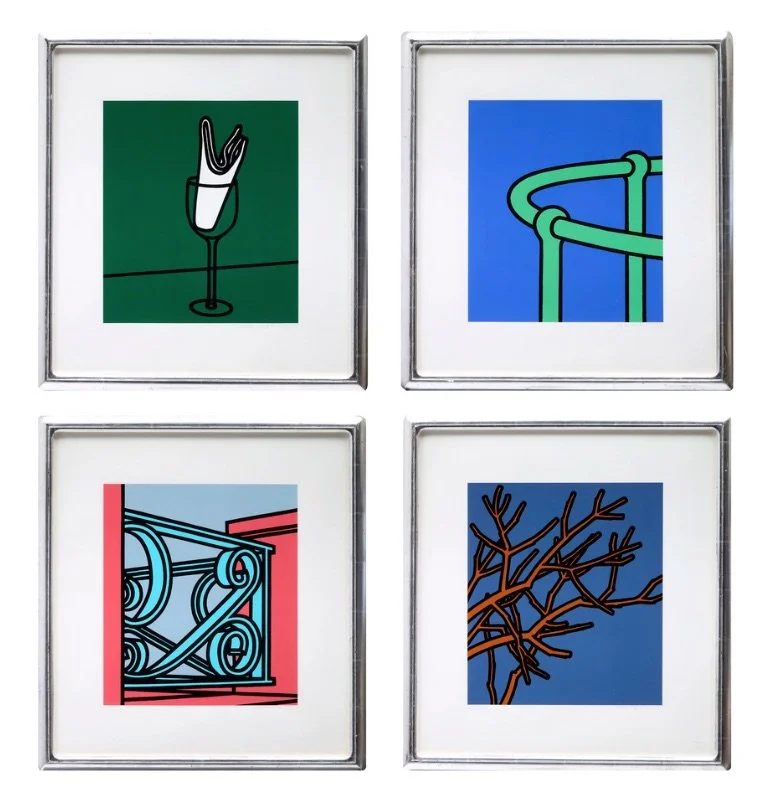
Her Handkerchief Swept Me Along The Rhine 1973
Screenprint on Neobond paper, 610 × 560mm (sheet), 405 × 355mm (image). Signed and numbered in pencil from the edition of 100. Printed by Advanced Graphics and Frank Kicherer, Stuttgart; published by Petersburg Press in association with Waddington galleries, London. Excellent condition, framed with edges showing in an expensive hand-made, hidden-mitre, silver frame.
Collections: Tate Gallery; Arts Council; National Gallery of Art, Washington DC; University of Michigan Museum of Modern Art; Minneapolis Institute of Art. Reference: Patrick Caulfield: the complete prints 1964-1999 (Cristea 38d). Provenance: Corporate collection UK
£1,750
From Caulfield’s important and famous suite of twenty-two screenprints titled Some Poems of Jules Laforgue. There were three editions, A, B & C. Editions A & B each comprised 200 unsigned prints trimmed to the edge of the image, with six prints signed on the reverse. Edition C (from which this example comes) is by far the most desirable as all twenty-two of the images are on full, untrimmed sheets and are signed and numbered from the edition of 100 directly below the image. Individual examples from Edition C usually retail for over £2,000 (look it up), so this one represents exceptional value.
All The Benches Are Wet, The Woods Are So Rusty 1973
Screenprint on Neobond paper, 610 × 560mm (sheet), 405 × 355mm (image). Signed and numbered in pencil from the edition of 100. Printed by Advanced Graphics and Frank Kicherer, Stuttgart; published by Petersburg Press in association with Waddington galleries, London. Excellent condition, framed with edges showing in an expensive hand-made, hidden-mitre, silver frame.
Collections: Tate Gallery; Arts Council; National Gallery of Art, Washington DC; University of Michigan Museum of Modern Art; Minneapolis Institute of Art. Reference: Patrick Caulfield: the complete prints 1964-1999 (Cristea 38s). Provenance: Corporate collection UK
£1,850
From Caulfield’s important and famous suite of twenty-two screenprints titled Some Poems of Jules Laforgue. There were three editions, A, B & C. Editions A & B each comprised 200 unsigned prints trimmed to the edge of the image, with six prints signed on the reverse. Edition C (from which this example comes) is by far the most desirable as all twenty-two of the images are on full, untrimmed sheets and are signed and numbered from the edition of 100 directly below the image. Individual examples from Edition C usually retail for over £2,000 (look it up), so this one represents exceptional value – it is also one of the few that only exist signed in any of the editions.
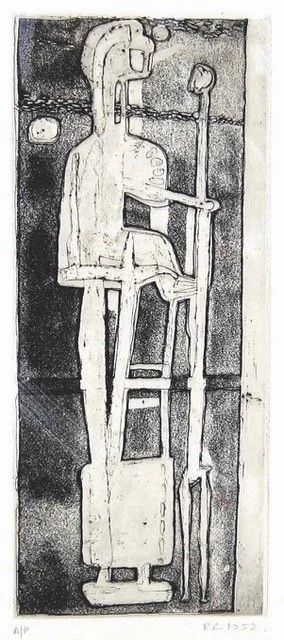
Standing Figure 1952
Etching on heavy wove paper 550 x 320mm (sheet), 360 x 150mm (image). Signed with initials, dated 1952 and numbered from the edition of 50. Published and printed to accompany the Robert Clatworthy monograph (Sansom 2012). Excellent condition, unframed.
£275
The title refers only to one figure, but there are clearly two in the image: the sculptor and his sculpture – but which is which, who has the power? Their relationship is an enigmatic one.
Close Up #3 1967
Lithograph on hot pressed paper printed to edges, 595 x 595mm (sheet). Signed, dated and numbered in pencil from the edition of 75. Published and printed at the Curwen Studio, London 1967. Excellent condition, unframed.
Collection: Tate Gallery. Provenance: Curwen Gallery Archive
£375
Cohen is noted in particular for the creation of Aaron in 1979, the first computer program to utilise AI in order to generate art. His work was always at the cutting edge of technology; the Close Up series, printed in conjunction with Stanley Jones, took lithography to a new level in its artistic response to the development of correlative light in electron microscopy (CLEM). Science aside, though, this is a very groovy piece of psychedelia.
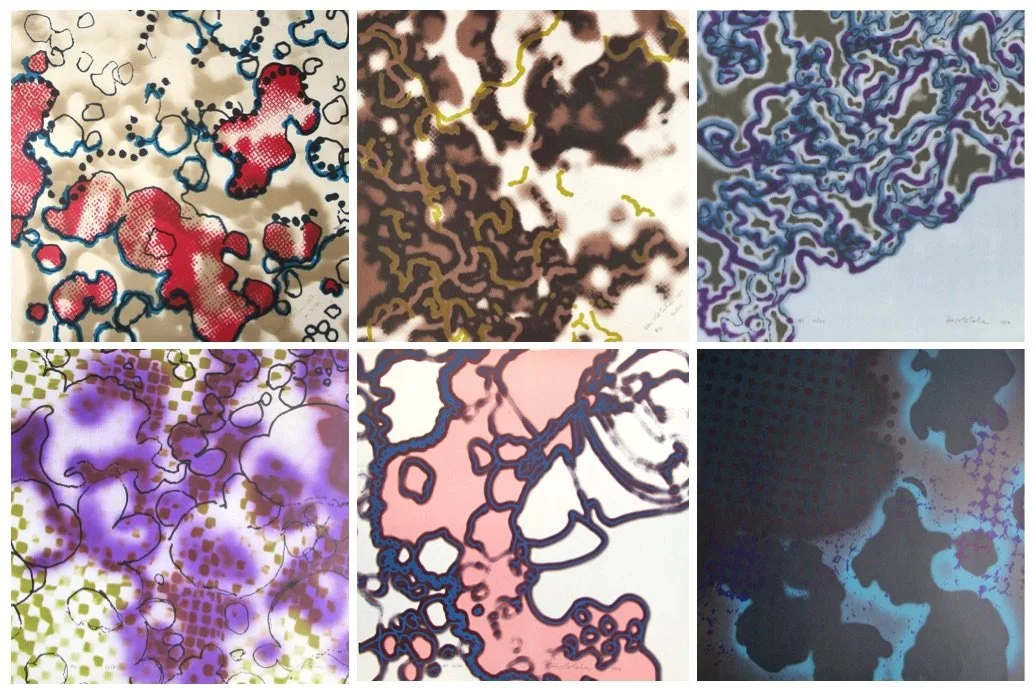
Close Up #1-6 1967
The complete set of six lithographs on hot-pressed paper printed to edges, 595 x 595mm each sheet. Individually signed, dated and numbered from the edition of 75. Published and printed at Curwen Studio, London 1967. Very good condition, unframed.
Collection: Tate Gallery. Provenance: Curwen Gallery Archive
£1,500
Cohen is noted in particular for the creation of Aaron in 1979, the first computer program to utilise AI in order to generate art. His work was always at the cutting edge of technology; the Close Up series, printed in conjunction with Stanley Jones, took lithography to a new level in its artistic response to the development of correlative light in electron microscopy (CLEM). Science aside, though, this is a very groovy piece of psychedelia.
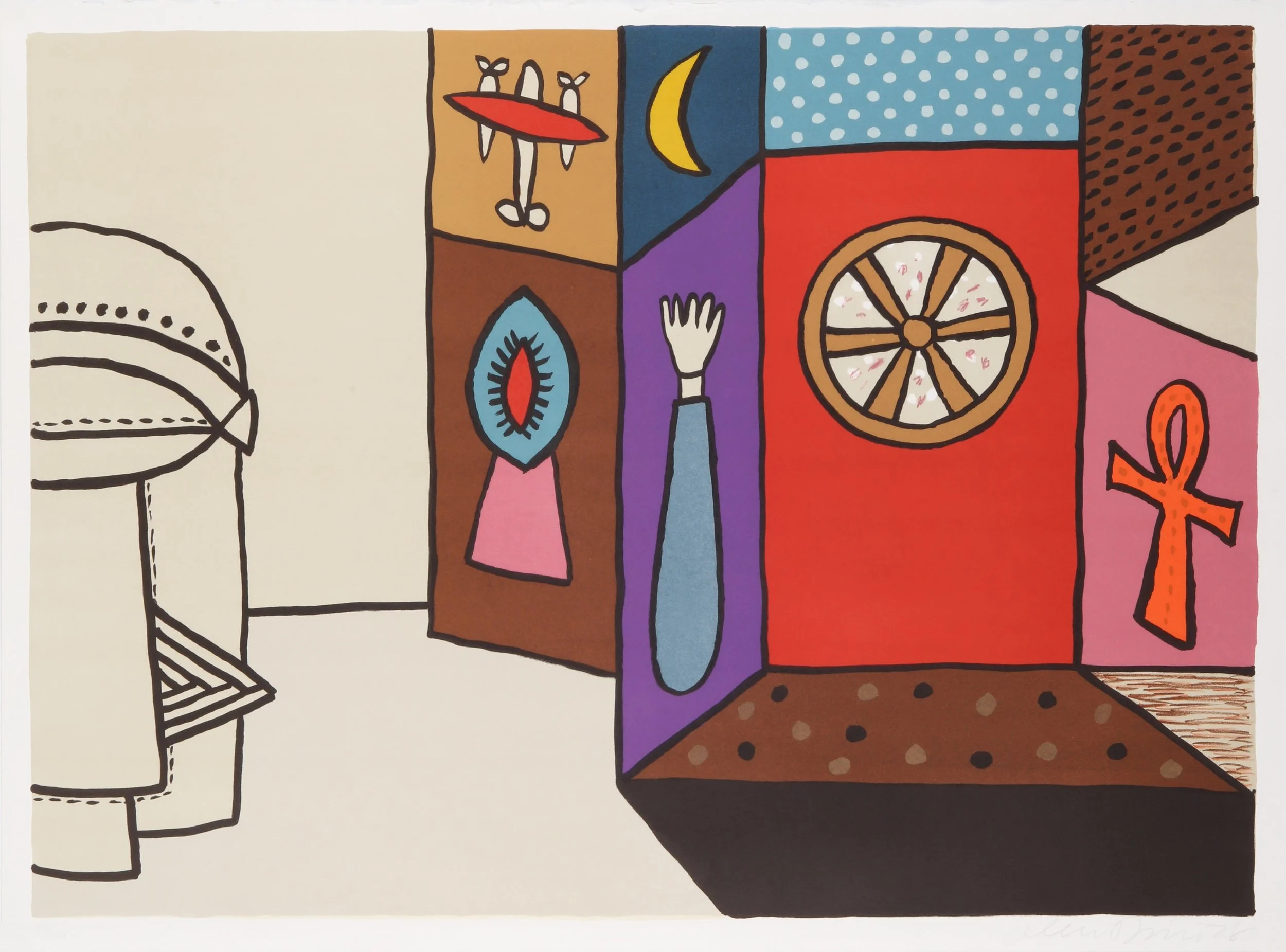
Magic Picture No.2 1978
Lithograph on T H Saunders paper 575 × 770mm (sheet), 534 × 736mm (image). Signed dated and numbered in pencil from the edition of 100. Printed at Curwen Studio, London. Excellent condition, unframed.
Collection: National Gallery of Scotland
£650
As the title suggests, Davie was fascinated by magic, mysticism and Zen. He traveled widely and while in Venice he met Joan Miro, who became an instant inspiration. In America Peggy Guggenheim introduced him to the work of Jackson Pollock (and bought two of his pictures); he also played jazz saxophone and found that he could combine the spontaneity he achieved as a musician with the surrealism, abstraction and mystic symbolism that inspired him as a painter to form a new and unmistakable voice.